Found in a damaged house east of Fort Connor in the Hinterlands along with a shard and a mosaic piece in Dragon Age: Inquisition
Within the Diamond Quarter of Orzammar lies the Shaperate, a branch of dwarven
society so ancient that the dwarves themselves do not know when or
where it began. They are the keepers of history for a people who have
never known the sun or seasons, and who track time by the lives and
deaths of kings. But they are not mere historians. They are craftsmen. For the living history of the dwarves is not written, but forged. “The Memories,” as the dwarves call their records, are runes painstakingly crafted from lyrium which contain the actual thoughts of the Shapers who made them.
The making of runes is not restricted solely to the Shapers. The most commonly useful kind are crafted by many members of the Smith Caste from lyrium and other magically reactive metals and can imbue a variety of fascinating new properties to an item when properly applied, just as the runes of Tevinter
design do. But runes are found everywhere in dwarven artwork and not
all serve a practical purpose – at least, not one that’s known. They are
carved onto houses and store fronts. They are embroidered on garments.
Etched in glassware. Even painted on chamber pots.
The meanings of the symbols themselves are sacred knowledge kept
by the Shaperate. They are not, as many surface-folk believe, the written language
of the modern dwarves, but rather are remnants of a lost language that
predates Orzammar, the dwarven kingdom, and even the tens of thousands
of years of history recorded in the Memories. The Shaperate recognizes
the meanings of a few dozen dwarven runes. “Memory,” obviously, is used
for their record keeping. Many have not so much been translated as
inferred. Runes which decorate both armor and load-bearing architecture
might very well mean “Strength” or “Endurance.” New symbols are
unearthed now and then in the fallen thaigs, brought back by the Legion of the Dead
and jealously hoarded by the Shapers who struggle to find their uses
and origins. Were these symbols an earlier version of the written
dwarven tongue? A language that fell into disuse, replaced by the modern
King’s Tongue? It is hard to guess, and the Memories offer us no wisdom.
—From In Pursuit of Knowledge: The Travels of A Chantry Scholar by Brother Genitivi
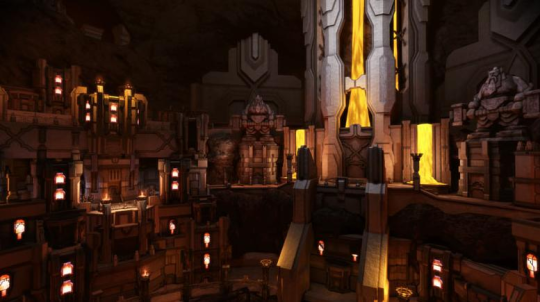
*the above image is sourced from the Dragon Age wiki*

 I'm Dragon Age Trash